

A Renaissance Paradox: Art & Inequality
Wednesday 25 November 2026, 17:00
Room 00.063, Schwarzman Centre, Radcliffe Observatory Quarter, Woodstock Road, Oxford OX2 6GG
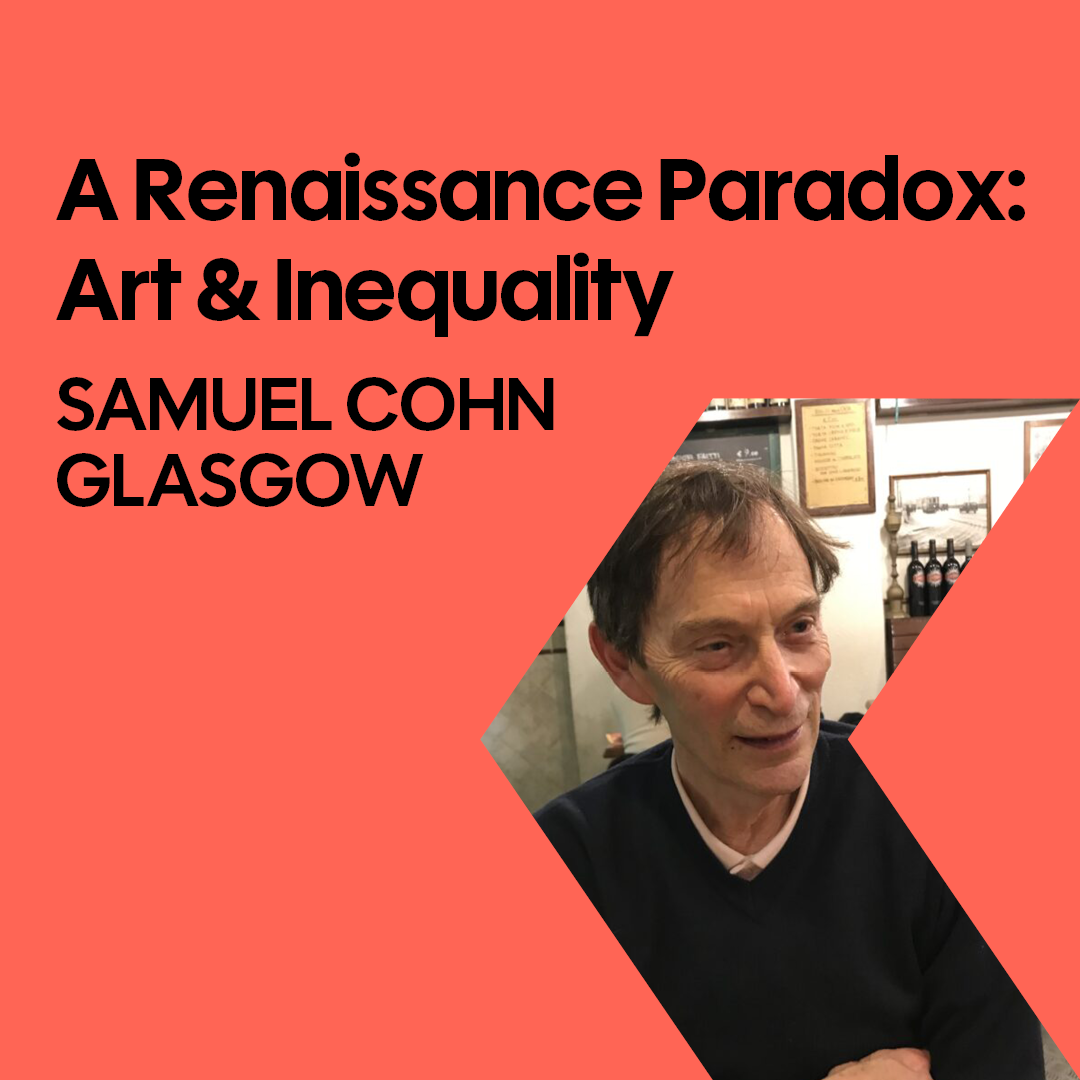
Samuel Cohn (Glasgow)
My lecture will explore two broad fields of study, one in the social sciences; the other in the humanities. I begin with the longest period of history that thus far has been quantified when the gap between rich and poor narrowed rather than increased: the century following the Black Death, in most places c. 1375 to 1475. With the ground-breaking studies of Thomas Piketty, Guido Alfani, and others, inequality studies have flourished over the last decade. But for Europe before the nineteenth century, historians and economists have focused on economic inequality alone and have relied almost entirely on fiscal records, few of which survive before the Black Death or even before 1400.
My work on inequality focuses on other types of records that document a cultural history of inequality. Specifically, I am studying the commissioning of art within sacred places by a wide arena of late medieval and Renaissance participants, which included elites, shopkeepers, skilled artisans, labourers, and peasants. The substance of this strand of cultural history pertained not only to aesthetics or art history (narrowly conceived), but involved religious piety, ideals of family, remembrance, and honour. By the last years of the fourteenth century, the trajectories of this widening cultural participation shifted in the opposite direction. Just as nonelites were prospering economically, they were losing their capacities to commission works of art in public places for their individual and family remembrance. In addition to unravelling this Renaissance paradox further, the lecture will seek to broaden the concepts of abundance and scarcity beyond economic concerns alone.
Samuel Cohn, A Renaissance Paradox: Art and Inequality